The Complete Guide to Small Engine Maintenance Filters for Better Performance
When small engines start acting up, dirty air, oil, or fuel is often part of the problem. Air filters for small engines block dust and debris before they enter the engine, which supports cleaner combustion and steadier performance. That small step can save a lot of trouble later.
What These Filters Do
Small engine maintenance filters work like a simple shield for the engine. They keep air, oil, and fuel cleaner while the machine runs. That matters because dirt and dust can sneak into the system and slowly wear things down.
Clean filtration helps:
- Reduce wear inside the engine
- Support longer engine life
- Keep performance steady
- Lower the chance of contamination problems
These filters are used on many kinds of equipment, from everyday outdoor power tools to industrial machines. The goal is the same in every case: cleaner flow and fewer breakdowns.
When a Filter Is Starting to Fail
A weak or dirty filter does not always fail all at once. It usually gives warning signs first.
Common signs include:
- Overheating
- Power loss
- Hard starting
- Poor airflow
- Premature engine failure
If these problems keep showing up, the filter may no longer be doing its job well. That is when replacement becomes important.
Where These Filters Matter Most
In lawn equipment, generators, and industrial machines, air filters for small engines help keep dirt out of the intake. That means the engine can breathe better and work with less strain.
Different jobs need different media types. Cellulose, synthetic, and fiberglass are all used in filtration, depending on the level of protection needed. The right media choice depends on the equipment and how hard it works.
How to Pick the Right Replacement
Choosing the right filter is easier when you start with the exact engine model. Small engine maintenance filters are often matched through an OEM number, part number, or manufacturer name. That avoids a bad fit and keeps performance on track.
Here is a simple way to check:
- Find the OEM number.
- Match the replacement by part number.
- Confirm the application.
- Make sure the filter fits the airflow needs.
That process saves time and reduces mistakes.
Common Problems and What They Can Mean
| Problem | What It Can Lead To | Why It Matters |
| Dirty intake air | Power loss | The engine cannot breathe well |
| Poor filtration | Faster wear | More damage builds up over time |
| Weak sealing | Contamination issues | Dirt can slip past the filter |
| Late replacement | Overheating | The engine works harder than it should |
Why Replacement Timing Matters
Filters do not last forever. As they collect more dirt, airflow can drop, and the engine may start to struggle. Replacing them on time protects the machine and keeps the work moving.
For many users, air filters for small engines are one of the easiest parts to overlook. But when they are clean and matched correctly, the difference shows up fast in smoother running and fewer service problems.
Keep Your Equipment Running Strong
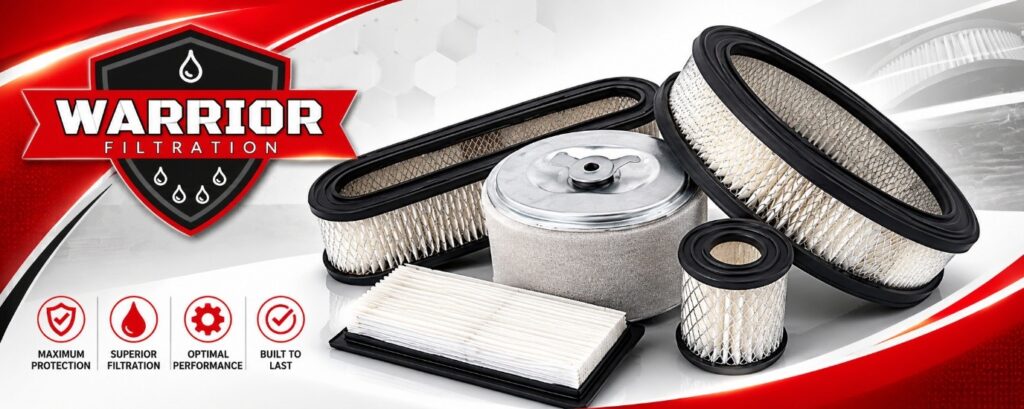
The right small engine maintenance filters can make a big difference in engine performance, reliability, and service life. Warrior Filtration simplifies the replacement process through extensive OEM cross-reference matching, making it easier to find the correct filter for your equipment.
With proper filtration and the right replacement solution, engines can stay cleaner, operate more efficiently, and perform reliably for longer periods.
FAQs
What do small engine filters protect against?
It blocks dirt, dust, and debris before they enter the engine, helping it run cleaner and last longer overall, too.
Why does a filter need replacement?
Dirty filters can cause power loss, overheating, poor airflow, and faster wear, so replacement should not be delayed for long.
How are replacement filters usually matched?
They are usually matched by OEM number, part number, or manufacturer name to avoid fit and performance problems later on.
What should I check before buying one?
Use the filter recommended for the exact engine model, since proper airflow and sealing matter more than guesswork in practice.