
What Makes Coalescence Important When Choosing an Air-Oil Separator Filter?
When compressed air carries tiny drops of oil, those drops need to be removed from the air stream. An Air-oil separator filter uses coalescence to bring these small oil drops together. The larger drops can then be separated from the air. This makes coalescence a key part of choosing a separator for industrial compressors.
What Does Coalescence Do?
Coalescence means small oil drops join to make bigger drops.
For an Air-oil separator filter, the process is:
Compressed air with oil drops → Separator element → Coalescence → Bigger oil drops → Oil separation
The separator deals with oil drops carried by compressed air. It does not do the same job as an air intake filter.
How Does Oil Separation Take Place?
Small oil drops enter the separator along with compressed air. The separator element uses coalescence to bring these drops together. As the drops join, they become bigger. The oil can then be collected and separated from the air stream. So, the separator has a clear role in compressor filtration. It removes oil from compressed air rather than dirt from incoming air.
Why Does Separator Construction Matter?
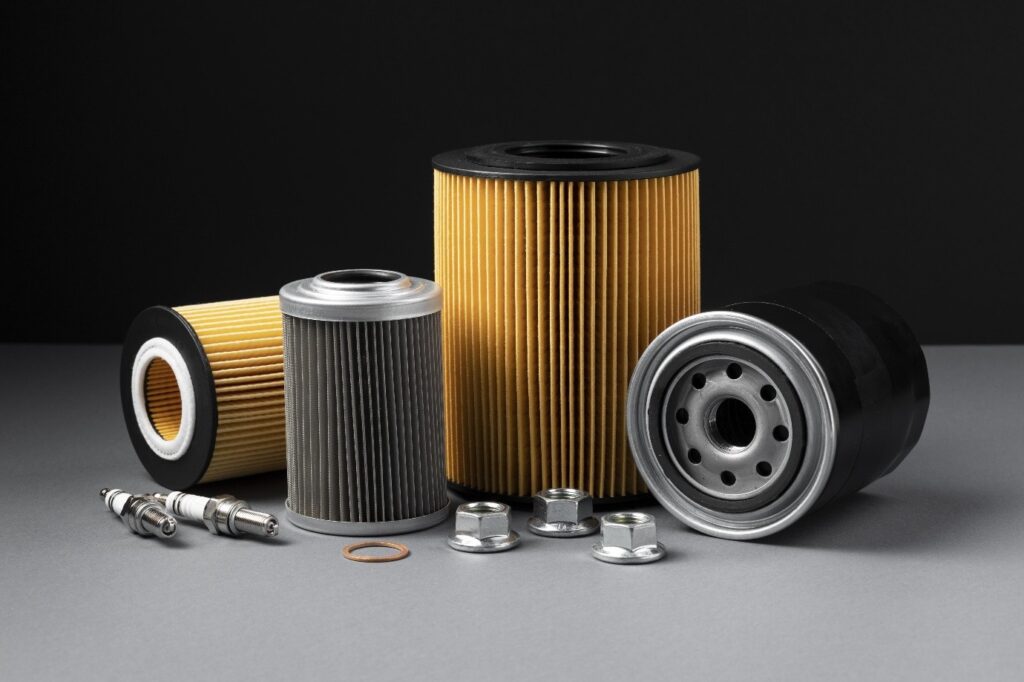
The parts used to build a separator are also important. A standard separator element uses borosilicate glass fibers wrapped around a support tube. Other designs include:
- Screw-on or spin-on cartridges
- Stacked filter elements
- Coalescent filter baffles
Spin-on cartridges are made for quick assembly and replacement.
Which Compressor Applications Need This Filter?
These separators are used with rotary screw compressors and blade compressors. The separator must match the equipment. The compressor type is one part of the selection process, but it should not be the only check. The available range also covers compressors from leading international manufacturers.
How Do You Match the Flow Rate?
Flow rate is another detail to check before choosing an Air-oil separator filter.
The separator range covers:
| Flow rate | Range |
| 0.6 to 7 m³/min | Standard range |
| Up to 45 m³/min | Larger systems |
These are ranges for the overall separator offering. They do not mean that every separator can handle every flow rate.
When Should the Separator Be Replaced?
A worn separator can be linked to higher oil carryover, higher operating temperatures, more service calls, higher energy costs, and increased pressure drop. These signs do not prove that the separator is the only cause. They show that the system needs closer checking. A replacement or retrofit can be considered when separator performance starts to decline.
How Can You Identify the Right Replacement?
Start with the old separator. Check its OEM number, manufacturer, part number, and product details. The compressor application and flow needs should also match. Do not pick a replacement just because it looks the same. Correct part information gives a much safer starting point.
How Does Cross-Referencing Support Selection?
Cross-referencing gives maintenance teams several ways to find a possible replacement.
Search information can include:
- OEM number
- Warrior part number
- OEM or manufacturer
- Product description
Product records connect the OEM name, OEM number, and Warrior part number. After finding a possible match, check the cross-reference and product details against the right manufacturer and customer specifications. These are replacement parts for original manufacturer components. They should not be called original OEM parts.
Find the Right Filtration Replacement
Choosing the right separator starts with the compressor, part number, flow needs, and filter design. Coalescence also matters because it brings tiny oil drops together so they can be separated from compressed air.
For industrial replacement filtration, Warrior Filtration provides OEM-based product searches and cross-reference options. When the right Air-oil separator filter is needed, check the part details and confirm the application before ordering.
FAQs
What does coalescence mean in an air-oil separator?
Coalescence brings tiny oil drops together to form larger drops. These larger drops can then be separated from the compressed-air stream.
Which compressors use air-oil separators?
The separator range is made for rotary screw and blade compressors. The selected part must still match the compressor and its application.
What are separator elements made from?
A standard separator uses uniform-grade borosilicate glass fibers wrapped around a support tube. Other designs include spin-on and stacked elements.
How do you find a replacement separator?
Use the OEM number, manufacturer, Warrior part number, or product description. Then check the cross-reference and application details before ordering.